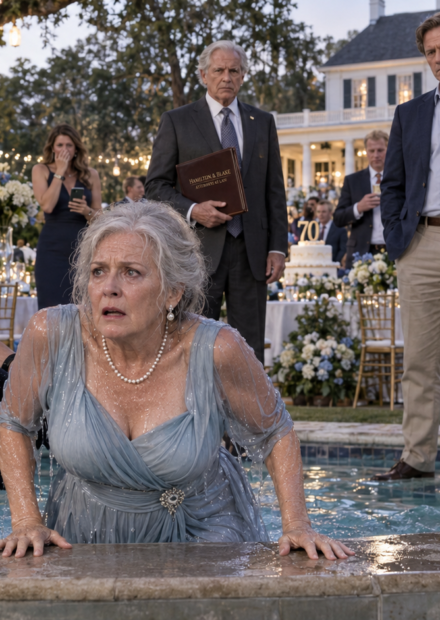
Chapter 5 – THE APOLOGY I REFUSED TO WRITE FOR HIM
For the next month, Ethan and I spoke less than we had at any point since David died.
That was deliberate.
Not punishment.
Space.
At first, the quiet felt unnatural.
Ethan had called me for everything.
Recommendations.
Recipes.
Tax questions.
Whether chicken was still safe after two days in the refrigerator.
Whether a tie worked with a shirt.
Whether he should confront his supervisor.
Whether a text sounded rude.
Whether he had overreacted.
Whether he had underreacted.
Whether he should apologize.
I had answered every call as if availability were the purest form of maternal love.
Now I began saying things I should have said years earlier.
“What do you think?”
“Have you checked?”
“You can decide that.”
“I’m not the right person to solve this.”
The first few times, Ethan sounded irritated.
Then amused.
Then thoughtful.
One Saturday morning, he called to ask whether he should return the expensive wedding gifts.
“What does etiquette say?” I asked.
“I was hoping you’d know.”
“I probably do.”
“Mom.”
I smiled.
“Look it up.”
He groaned.
“I miss the old you.”
“No, you miss free administrative services.”
He laughed.
Then he returned the gifts.
I did not ask how.
Progress rarely arrives dramatically.
Mostly, it looks like someone handling their own errands.
The financial aftermath took longer.
My contribution to the wedding had already been spent.
I did not ask Ethan to repay it.
That money had been a gift.
The wedding failed, but the gift did not retroactively become a loan.
Some friends disagreed.
Ruth, my closest friend since college, nearly choked on her coffee when I told her.
“You are letting them walk away from that amount?”
“I am not letting anyone walk away. I gave the money.”
“For a wedding.”
“Yes.”
“There was no wedding.”
“There were flowers, food, music, a venue, and two hundred people who ate very expensive appetizers while waiting to learn there would be no ceremony.”
Ruth shook her head.
“You’re too nice.”
“No.”
I stirred my coffee.
“I think I was too available. That is not the same as nice.”
She looked at me carefully.
“What’s the difference?”
“Nice can have boundaries.”
That sentence surprised both of us.
I had spent decades believing kindness meant endurance.
But endurance without limits can become permission.
Two months after the canceled wedding, the seamstress called.
“Your dress is ready.”
I had almost forgotten it.
When I returned to her shop, she carried the pale blue gown from the back room.
I searched for the tear.
It was still there if I knew where to look.
A faint repaired line beneath the bodice.
“You saved it,” I said.
“She did a number on this dress.”
I looked up.
The seamstress’s expression changed.
“I assumed.”
“Yes.”
“I’m sorry.”
“Thank you.”
She ran a hand along the repaired fabric.
“You’ll be able to wear it again.”
I almost said I never would.
Instead, I took the gown home.
Three weeks later, Bellamy House hosted a retirement dinner for a former superintendent I knew.
Ruth was attending and asked me to go with her.
My first answer was no.
The thought of returning made my stomach tighten.
Then I looked at the blue garment bag hanging in my closet.
I thought about Madison saying I should be too embarrassed to walk into her ceremony.
Something inside me became stubborn.
I wore the pale blue gown.
Not because I wanted to prove anything to Madison.
She would not be there.
I wore it because I wanted one memory of that dress that did not end with me holding it closed in a hallway.
At Bellamy House, Natalie saw me first.
She stopped near the reception desk.
Her face lit.
“Claire.”
“Hello.”
Her eyes dropped to the gown.
“You had it repaired.”
“I did.”
“It looks beautiful.”
“Thank you.”
For a moment, we both remembered.
Neither of us needed to say it.
Then Natalie smiled.
“I’m very glad you’re here.”
“So am I.”
And I realized I meant it.
Healing, I learned, was not always about forgetting what happened.
Sometimes it meant returning to the same place and discovering the walls no longer belonged to the memory.
Ethan called the next day.
“Ruth posted a picture.”
Of course she had.
“And?”
“You wore the dress.”
“Yes.”
He was quiet.
“Was that hard?”
“Yes.”
“Why did you do it?”
“Because I liked the dress.”
He laughed softly.
Then he said, “I’m proud of you.”
I felt my shoulders stiffen.
Perhaps he heard the silence.
“What?”
“Don’t make me into the brave victim in your redemption story.”
He exhaled.
“That isn’t what I meant.”
“I know.”
“Then why—”
“Because I don’t want what happened to become the center of our relationship either.”
He was silent.
“I don’t want you spending the next ten years trying to atone for one terrible afternoon.”
“It wasn’t one afternoon.”
That stopped me.
“What do you mean?”
He spoke slowly.
“I’ve been thinking about everything before it.”
I sat down.
“What things?”
“The way I talked about you to Madison.”
My stomach tightened.
“Go on.”
“I made you sound… endless.”
“What does that mean?”
“Like you had endless patience. Endless money. Endless forgiveness.”
I closed my eyes.
He continued.
“Whenever Madison worried about the wedding, I said, ‘Mom will help.’ Whenever something went over budget, I said, ‘Mom won’t let us get stuck.’ Whenever she worried you were upset, I said, ‘Mom gets over things.’”
The words hurt.
But they also clarified something.
Madison had not invented the idea that I had no boundaries.
Ethan had advertised it.
“I turned you into a solution,” he said.
“Yes.”
“And when she treated you like one, I acted shocked.”
I stared at the floor.
“Thank you for telling me.”
“There’s more.”
I almost laughed.
“Wonderful.”
He did not.
“After Dad died, I think I liked being the person you needed.”
My throat tightened.
“I did need you.”
“I know.”
“And maybe too much.”
He was quiet.
“You called every day,” he said.
“I remember.”
“And if I missed a call, you’d text to make sure I was okay.”
“I was afraid of losing someone else.”
“I know.”
“I never wanted you to feel trapped.”
“I didn’t. Not exactly.”
“What did you feel?”
“Important.”
That answer hurt in a different way.
“Maybe we both got something from it,” he continued. “You got to feel like you still had family close. I got to feel like the center of somebody’s world.”
I leaned back.
There are truths you resist because they sound cruel.
Then someone says them gently, and you recognize yourself.
“Yes,” I said.
“I think that’s true.”
“Madison hated it.”
“I know.”
“Some of what she complained about was real.”
“Yes.”
“And some wasn’t.”
“Yes.”
“And none of it justified what she did.”
“No.”
He exhaled.
“I keep trying to find the clean version where one of us was completely right and somebody else was completely wrong.”
“There probably isn’t one.”
“She hit you.”
“That part is clean.”
He laughed sadly.
“Okay. That part.”
“But relationships rarely collapse because of only one moment.”
“Do you blame me for the engagement ending?”
“No.”
“Do you blame yourself?”
I thought.
“A little.”
“Why?”
“Because I helped build some unhealthy patterns.”
“That didn’t make Madison hit you.”
“No.”
“Then don’t do that thing where you take responsibility for everybody.”
I smiled.
“Listen to you.”
“I’ve had a lot of practice material lately.”
Our conversations improved after that.
Not because we stopped disagreeing.
Because we began surviving disagreement without rescue.
Then, three months after the wedding, Madison called me.
I stared at her name.
I had not heard from her since the porch.
My first impulse was to let it ring.
Then curiosity won.
“Hello?”
“Claire.”
Her voice was different.
Quieter.
“Hello, Madison.”
“I won’t keep you long.”
“All right.”
“I owe you an apology.”
I said nothing.
She continued.
“Not an explanation.”
That got my attention.
“I’ve spent months explaining.”
“Yes.”
“I blamed stress.”
“Yes.”
“I blamed the money.”
“Yes.”
“I blamed Ethan.”
“Yes.”
“And mostly I blamed you.”
“Yes.”
She inhaled slowly.
“I hit you because I was angry and because in that moment I believed my anger gave me permission to punish you.”
I closed my eyes.
No excuses.
No because you made me feel.
No if I hurt you.
She continued.
“I tore your dress because I wanted to humiliate you.”
My throat tightened.
“I know.”
“I told Ethan you grabbed my wrist after you left.”
“I know.”
“I lied.”
“Yes.”
“I wanted him to feel like what happened was mutual.”
There it was.
The word Ethan had used in the hallway without meaning to.
Everybody calm down.
Mutual.
Two troublesome women.
A fight.
An argument.
Madison had tried to turn aggression into conflict because conflict distributes blame.
“I am sorry,” she said.
I looked out my kitchen window.
The trees had begun changing color.
“You hurt me,” I said.
“I know.”
“You also put Ethan in a position where he had to decide whether to believe what he saw.”
“I know.”
“He failed that test.”
“I know.”
“That part belongs to him.”
“I understand.”
I was quiet.
“Why are you calling now?”
“Because my therapist said an apology isn’t an apology if you’re using it to get something.”
I had not known she was seeing someone.
I also knew better than to ask questions that were not mine.
“So what do you want?”
“Nothing.”
The word landed strangely.
That was what I had said to her on my porch.
Perhaps she remembered.
“I don’t expect forgiveness.”
I thought about that.
Forgiveness is complicated.
People talk about it as though it is a door you either open or keep locked.
For me, it felt more like a room I might eventually enter without inviting the other person inside.
“I accept your apology,” I said.
She breathed out.
“But I am not ready for a relationship with you.”
“I understand.”
“And accepting the apology does not mean what happened was acceptable.”
“I know.”
“Good.”
We ended the call.
I sat there afterward feeling neither victorious nor healed.
Just lighter.
Twenty minutes later, Ethan called.
“Did Madison call you?”
“Yes.”
“She told me she was going to.”
I frowned.
“You’re speaking again?”
“Occasionally.”
My heartbeat changed.
I had promised myself I would not tell him what to do.
That promise suddenly became much harder.
“What does occasionally mean?”
He laughed softly.
“That sounded very much like the old Mom.”
I closed my eyes.
“You’re right.”
“I know you’re worried.”
“Yes.”
“We’re not getting back together.”
Relief moved through me so quickly I disliked myself for it.
“I didn’t ask.”
“You were about to.”
“I was thinking loudly.”
“She apologized to me too.”
“For what?”
“For telling me you grabbed her. For making me feel guilty every time I tried to question something.”
I listened.
“She’s doing work, Mom.”
“Good.”
“You don’t trust her.”
“No.”
“Fair.”
That answer surprised me.
“I also don’t hate her,” I said.
“I know.”
“Those are different things.”
“I know.”
He paused.
“Would you ever forgive me completely?”
The question was so vulnerable that my first instinct was to reassure him.
I resisted.
“I don’t know what completely means.”
He was silent.
“I forgive you for panicking,” I said. “I forgive you for being afraid. I forgive you for making the wrong choice in that hallway.”
He exhaled.
“But?”
“But trust is not the same thing as forgiveness.”
He absorbed that.
“I trusted that if something terrible happened, you would see me.”
His voice broke.
“I know.”
“I trusted that I would not have to prove my dignity to you.”
“I know.”
“That trust was damaged.”
“What do I do?”
There was the old question.
This time I answered differently.
“Live in a way that makes the answer unnecessary.”
Silence.
Then:
“Dad definitely would’ve loved this version of you.”
I smiled through tears.
“Your father would be unbearable about being right.”
Ethan laughed.
And for the first time, talking about David did not feel like touching a bruise.
It felt like inviting him briefly into the room.
—