Chapter 6 – WHAT MY SON FINALLY UNDERSTOOD
A year after the canceled wedding, Ethan asked me to meet him at Bellamy House.
I almost refused.
Not because I still feared the building.
Because I suspected sentiment.
Ethan had developed an annoying habit of trying to create symbolic moments.
I blamed therapy.
“Why Bellamy House?” I asked.
“Because I need to give you something.”
“You can give it to me at home.”
“Please.”
I considered making him explain himself.
Then I remembered something I had been practicing.
Not every unknown outcome required control.
“All right.”
We met on a Tuesday afternoon.
No wedding.
No string quartet.
No flowers filling the lobby.
Bellamy House looked smaller without two hundred guests and nine months of expectations pressed into every room.
Ethan stood near the entrance wearing jeans and a navy sweater.
He looked older.
Not physically.
Something in his posture had changed over the year.
He no longer entered every conversation looking for the fastest way to make discomfort disappear.
“Hi, Mom.”
“Hi.”
He hugged me.
I hugged him back.
“Where are we going?”
“Conference room.”
“That sounds ominous.”
“It isn’t.”
Natalie was waiting.
I stopped when I saw her.
“What is this?”
She smiled.
“Nothing dramatic.”
“I’ve learned not to trust that phrase in this building.”
Ethan laughed.
On the table was a cream folder.
My stomach tightened before reason caught up.
It looked like the wedding contract.
“Sit down,” Ethan said.
“No.”
He blinked.
“Mom.”
“I spent twenty-three years telling children they didn’t have to sit just because somebody ordered them to.”
“Fine. Stand.”
Natalie was trying not to smile.
Ethan opened the folder.
Inside was a check.
I stared at it.
Then at him.
“What is this?”
“My share of the wedding loss.”
I did not touch it.
“I told you that money was a gift.”
“I know.”
“Then why are you doing this?”
“Because the gift was for a marriage.”
“No.”
He looked surprised.
“The gift was for you.”
“Mom.”
“It was.”
“I know.”
“Then keep your money.”
“No.”
My eyebrows rose.
In thirty-four years, my son had rarely said that word to me so calmly.
“No?”
“No.”
He pushed the check toward me.
“I am not paying you back because I think you made a bad gift. I’m paying you because I spent years assuming you would absorb whatever consequences I didn’t want.”
I stared at him.
“This isn’t guilt?”
“Some.”
“That’s not reassuring.”
He smiled.
“It’s also responsibility.”
“How long did it take you to save this?”
“Almost a year.”
“Ethan.”
“I took extra consulting work.”
My throat tightened.
“You didn’t have to.”
“I know.”
Those two words were different now.
Once, when Ethan said I know, he often meant please stop talking.
Now it meant I heard you and decided anyway.
Natalie quietly stood.
“I’ll leave you two.”
“Thank you,” Ethan said.
When the door closed, I looked at the check again.
It was not the full amount I had spent.
Roughly half.
“My exact portion?” I asked.
“Yes.”
“How did you calculate it?”
“I made a spreadsheet.”
I laughed so suddenly I had to sit.
“Of course you did.”
He laughed too.
Then his face became serious.
“Madison paid part of the vendor balance her parents originally covered.”
I looked up.
“You’re still in contact?”
“Sometimes.”
“How is she?”
“Better, I think.”
I waited.
He added, “We’re not together.”
“I didn’t ask.”
“You were thinking loudly again.”
I smiled.
“What does sometimes mean?”
“We talked after her grandmother died. And she emailed me when she finished paying her part of the photography contract.”
“I see.”
“She moved to Denver.”
“Good for her.”
“She got promoted.”
“Good.”
He studied me.
“You really don’t hate her.”
“No.”
“Even now?”
“Hating her would require too much maintenance.”
He laughed.
I meant it.
Madison had become part of my history.
A painful part.
But she no longer occupied my daily thoughts.
That was its own kind of freedom.
Ethan pushed the check closer.
“Take it.”
I touched the paper.
“I could put it toward your retirement.”
“I am retired.”
“You know what I mean.”
“Yes.”
I looked at him.
“Are you doing this because you believe paying me settles everything?”
“No.”
“Good.”
“I don’t think everything needs to be settled.”
That answer moved me.
For much of his life, Ethan had treated relationships like broken appliances.
Identify problem.
Repair.
Return to normal.
But some things do not return to normal.
They become something new.
“Then why here?” I asked.
“What?”
“Why bring me back to Bellamy House?”
He looked slightly embarrassed.
“Because I wanted to remember it differently.”
My chest tightened.
“Remember what?”
“The last time we stood here, I asked you to protect me from the consequences of what Madison did.”
I stayed quiet.
“And when you wouldn’t, I thought you were abandoning me.”
The honesty hurt.
“I know.”
“I was angry at you in that lobby.”
“I know.”
“I didn’t tell you that.”
“You didn’t need to.”
He stared toward the window.
“I thought mothers weren’t supposed to leave.”
I swallowed.
“And now?”
“Now I think you were the only person in that hallway who stayed.”
I frowned.
“What does that mean?”
“You stayed with reality.”
The words silenced me.
“I left.”
“Physically.”
He shook his head.
“But you didn’t pretend. Lauren didn’t either. Natalie didn’t. The rest of us were trying to make the wedding happen badly enough that we were willing to rename what happened.”
I felt tears rise.
“Madison called it stress. I called it a scene. Her parents called it a misunderstanding.”
“And I called it what it was.”
“Yes.”
He looked at me.
“You stayed.”
For a moment, I could not speak.
There are apologies that sound polished and leave nothing behind.
And there are sentences that enter a place words have failed to reach for years.
That was one of them.
I looked down at the check.
“I’ll take it.”
His shoulders loosened.
“But.”
He groaned.
“Of course there’s a but.”
“I am putting half into savings.”
“Fine.”
“The other half is going somewhere else.”
“Where?”
I smiled.
“You don’t get to control what I do with my money.”
He laughed.
“Fair.”
I donated part of it to the elementary school where I had served as principal.
Not because I wanted to turn pain into a grand lesson.
I simply remembered how many children came through my office believing love meant accepting whatever someone did to you.
Children learn boundaries long before they learn the word.
They learn from watching adults say no.
From seeing apologies require changed behavior.
From discovering that kindness does not mean surrender.
The rest of Ethan’s check went toward something selfish.
A trip.
David and I had planned to visit Portugal after retirement.
Then he got sick.
The trip disappeared beneath appointments, treatments, and hope.
For six years afterward, I could not imagine going without him.
Now I booked it.
Alone.
When I told Ethan, he was horrified.
“Alone?”
“Yes.”
“Across the Atlantic?”
“Planes go there.”
“Mom.”
“I’m sixty-three, not six.”
“Can I at least get your itinerary?”
“No.”
“What?”
“I’ll give you the hotel names.”
He stared.
I smiled.
“You’ll survive.”
He did.
So did I.
On my second evening in Lisbon, I sat at an outdoor table overlooking a narrow street washed gold by the setting sun.
A violinist played somewhere nearby.
People laughed in languages I did not understand.
For the first time since David died, being alone did not feel like evidence that something was missing.
It felt like space.
I ordered dessert.
David would have teased me for eating it before dinner.
I could almost hear him.
I laughed aloud.
A woman at the next table smiled at me.
I smiled back.
When I returned home, Ethan met me at the airport.
I had told him not to.
He came anyway.
Some patterns are allowed to stay.
He hugged me and took my suitcase.
“How was it?”
“Beautiful.”
“Did you miss me?”
“Occasionally.”
“Rude.”
We laughed.
Then, on the drive home, he became quiet.
“What?” I asked.
“Nothing.”
“You inherited your father’s terrible lying face.”
He smiled.
“I’ve been thinking about the wedding.”
I looked out the window.
Even after a year, those words could still change the air.
“What about it?”
“If Natalie hadn’t stopped you…”
“Yes?”
“If the contract hadn’t mattered, would you have left?”
I thought carefully.
“I hope so.”
“You don’t know?”
“No.”
He looked surprised.
“I was still learning.”
I watched the highway pass beneath us.
“People like to believe important moments reveal who they have always been. Sometimes they don’t.”
“What do they do?”
“They give you a chance to become someone different.”
He considered that.
“So you might have stayed?”
“Yes.”
“Even after Madison hit you?”
“I spent most of my life believing keeping peace was a moral achievement.”
He looked down.
“I helped reinforce that.”
“Yes.”
“Sorry.”
“I know.”
I smiled.
He looked at me.
“That’s annoying when you do it.”
“I learned from you.”
We reached my house near sunset.
Ethan carried my suitcase inside.
On the entry table, David’s photograph still stood where it always had.
I had never moved it.
I did not need to.
Moving forward was not the same as removing what came before.
Ethan picked up the photograph.
“I think about what Dad would’ve done that day.”
I took off my coat.
“He would have wanted to throw somebody out a window.”
Ethan laughed.
“No, seriously.”
“So am I.”
“Mom.”
I smiled.
Then I considered the question.
“Your father loved fiercely.”
“He would’ve defended you.”
“Yes.”
The answer came easily.
“He would have been furious with you too.”
“I know.”
“He might have said things he regretted.”
“Probably.”
“He wasn’t perfect.”
“No.”
I looked at David’s smiling face.
“But he never confused loving someone with making their consequences disappear.”
Ethan put the photograph down.
“I wish I’d understood that sooner.”
“You understand it now.”
“Do I?”
“You’re still learning.”
“So are you?”
“Especially me.”
He hugged me before leaving.
At the door, he turned.
“Mom?”
“Yes?”
“Do you still have the blue dress?”
I smiled.
“Yes.”
“Why?”
I thought about the repaired seam.
The faint line no one else could see.
“Because it fits.”
He rolled his eyes.
“You know what I mean.”
I did.
I had kept the dress because repairing something did not erase the tear.
The fabric had been changed permanently.
Yet it was still useful.
Still beautiful.
Still mine.
Much like trust.
Much like family.
Much like me.
“I keep it,” I said, “because damaged and ruined are not the same thing.”
Ethan stood very still.
Then he nodded.
“I like that.”
“So do I.”
After he left, I walked upstairs.
The garment bag hung at the back of my closet.
I unzipped it.
The pale blue fabric slipped beneath my fingers.
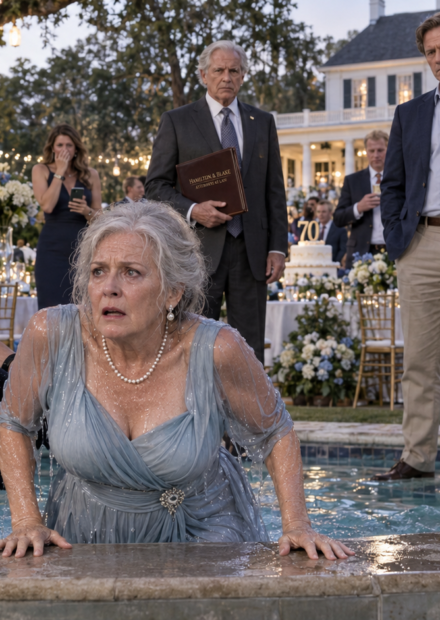
If I looked closely, I could still see where Madison had torn it.
The seamstress had repaired the damage beautifully, but she had not performed magic.
The past remained.
It simply no longer controlled what the dress could become.
For years, I had believed unconditional love meant making myself endlessly available.
No matter the insult.
No matter the disappointment.
No matter how often someone arrived at my door asking me to clean up a mess they had created.
I had been wrong.
Love could be unconditional.
Access was not.
Trust was not.
Money was not.
Silence was not.
Protection from consequences was not.
Ethan remained my son during the months when I barely trusted him.
I remained his mother when I refused to fix his engagement.
Madison remained a human being worthy of dignity even when I wanted nothing to do with her.
And I remained myself even after a person I had hoped to call family struck me and tried to humiliate me.
That was the lesson I carried away from Bellamy House.
Not revenge.
Not victory.
Not satisfaction that Madison lost her wedding or that Ethan ended the engagement.
Those things had never been what I wanted.
What I gained was smaller and more important.
The right to stop volunteering for pain simply because I could survive it.
Two years after the wedding that never happened, Ethan and I returned to Bellamy House one more time.
This time, there was no contract.
No bride.
No ceremony.
Natalie had invited several former clients and community members to a charity dinner benefiting local schools.
Ethan asked if I wanted him to come.
“Yes,” I said.
Not because I needed him.
Because I wanted his company.
There is a profound difference.
I wore the blue dress again.
At one point during dinner, Ethan looked across the table.
“What?”
“Nothing.”
“You’re staring.”
“I was thinking.”
“Dangerous.”
He smiled.
“I’m glad you left that day.”
My fork stopped.
That was not a sentence I ever expected to hear.
“Why?”
“Because if you had stayed, I would’ve married Madison.”
I remained quiet.
“Maybe we would’ve lasted six months. Maybe six years. I don’t know.”
I listened.
“But I would’ve learned that if I ignored something ugly long enough, somebody else would eventually carry it for me.”
He looked down.
“And you would’ve been the person carrying it.”
My eyes filled.
“Maybe.”
“No.”
He shook his head.
“You would’ve done it.”
I could not argue.
He knew me.
Or at least the woman I had been then.
“So yes,” he said. “I’m glad you left.”
I looked around the room.
The same ballroom.
The same chandeliers.
The same polished floor.
Nothing magical had happened to the building.
It had simply become a place again.
I reached across the table and touched his hand.
“I’m glad you followed eventually.”
His eyes reddened.
“It took me a while.”
“It did.”
“Are you ever going to stop reminding me?”
“No.”
He laughed.
So did I.
And that was how the story ended.
Not with Madison being destroyed.
Not with Ethan begging forever.
Not with me becoming harder than the woman I had been before.
I did not want hardness.
I wanted clarity.
I wanted love that could survive the word no.
I wanted relationships where kindness was given, not extracted.
I wanted my son in my life because we respected each other, not because one of us was too afraid to risk disappointing the other.
And that was what we slowly built.
Not the relationship we had before.
Something better.
Something with boundaries.
Something honest.
As the dinner ended, Ethan helped me into my coat.
Then his eyes caught the faint repaired line near the neckline of my gown.
He touched it gently with one finger.
“You can still see it.”
“Yes.”
“Does that bother you?”
I looked down at the seam.
Then I smiled.
“No.”
The tear was part of the dress now.
But it was not the whole dress.
Just as that afternoon was part of my life.
Not the whole life.
I walked out of Bellamy House beside my son.
This time, neither of us was trying to rescue the other.
Neither of us was pretending.
And neither of us needed a contract to know where we stood.
**The End**